


The main types of dining room chairs used in commercial venues include metal, bentwood, Parisian, cross-back, upholstered, arm, and stackable chairs. Each style creates a different look, but operators also need to consider service conditions, cleaning, storage, and the amount of floor space each chair occupies. This guide explains the construction, venue fit, durability, and indicative price tier of each option so you can compare styles before buying.
Start by browsing our full range of commercial cafe chairs and restaurant chairs. If you are planning a complete fitout, our cafe design guide can also help you connect chair style with tables, layout and customer flow.
Key Takeaways
- A chair style is best understood through its frame, seat and material, not its product name alone.
- Metal and stackable chairs suit fast turnover and flexible layouts, while upholstered and arm chairs support longer dining periods.
- Parisian and selected metal chairs can work outdoors, but only when the specific product and materials are rated for those conditions.
- Commercial testing, replaceable components and a practical chair rotation plan can matter more than the lowest purchase price.
How to Read a Chair Style
Chair names often describe a visual family, while the parts that determine day-to-day performance are the frame, seat and material. Looking at those three elements helps you compare products that may share a label but behave differently during service.
Frame
The frame carries the load and determines much of the chair’s weight, footprint and movement. Steel frames tend to feel solid and resist knocks, aluminium frames are easier for staff to move, and timber or timber-look frames bring a warmer visual finish.
Check how the legs are joined, whether the chair has floor glides and if the frame is approved for indoor, outdoor or covered use.
Seat
A solid metal, timber or moulded seat is usually quick to wipe between customers. Upholstery adds comfort but requires more attention to spills, seams and cleaning products.
Woven rattan-look or texteline seats allow a different level of flex and suit many casual settings, provided the weave is made for the intended environment.
Material
Material affects weight, maintenance, weather resistance and the way wear appears. A powder-coated metal chair, for example, should be checked for coating condition, while timber needs protection from prolonged moisture.
The product specification matters more than the style name, particularly when chairs will sit outside or be moved several times a day.
The Dining Chair Styles One by One
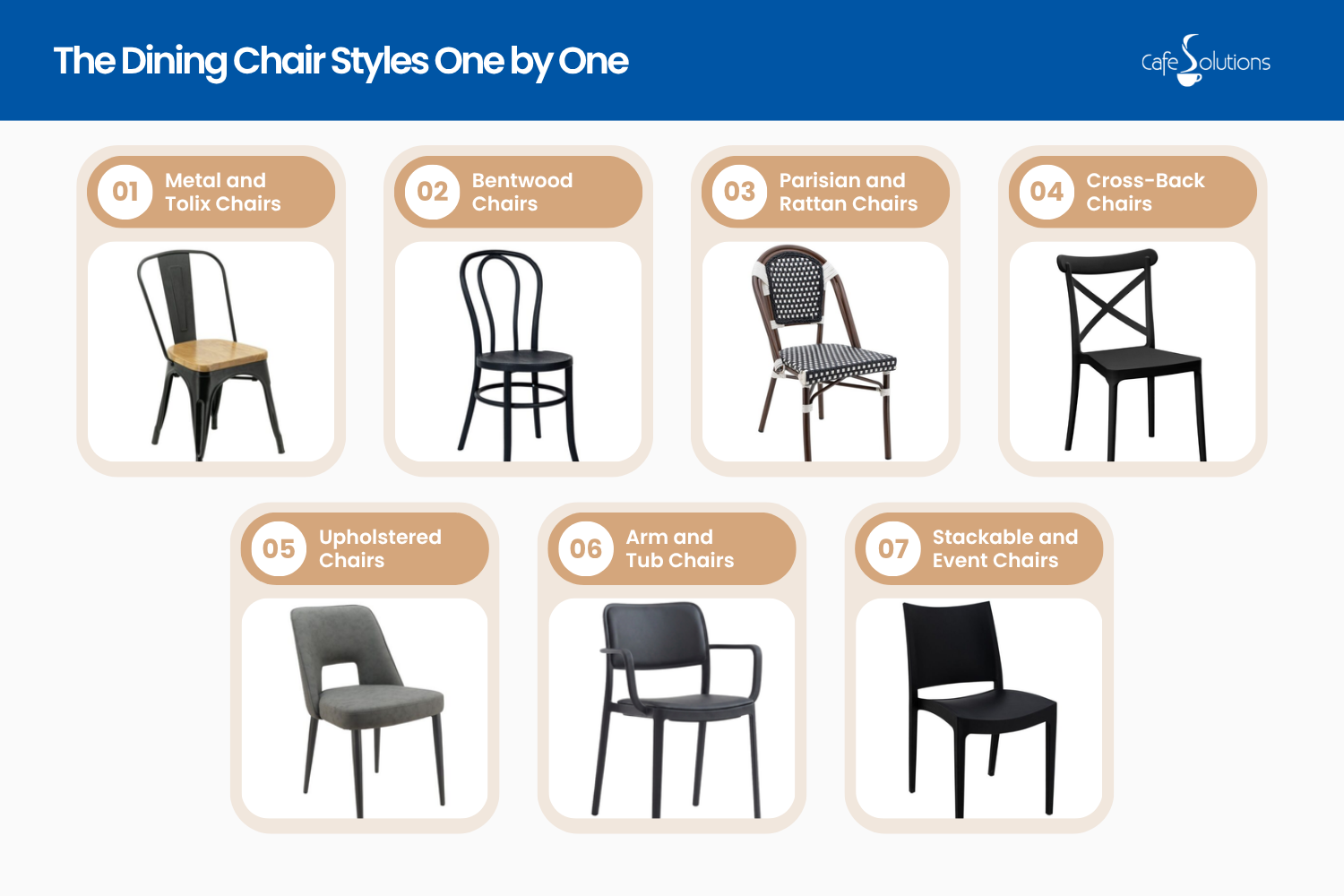
Metal and Tolix chairs
Metal chairs use steel or aluminium frames and may have a metal, timber-look or cushioned seat. The Tolix form is one of the most recognisable cafe chair styles, with clean lines, a compact profile and easy handling. It suits busy cafes, food courts, casual restaurants and industrial-style venues where fast cleaning and frequent movement are normal.
Commercial metal chairs can tolerate heavy daily use, although scratches and damaged coatings should be dealt with before corrosion starts. Outdoor suitability depends on the exact model and finish, so never assume every metal chair can remain exposed.
These chairs usually sit in the budget to lower mid-range tier. View our Tolix chair range and read our practical answer to whether Tolix chairs are comfortable.
Bentwood chairs
Bentwood chairs are defined by curved timber components formed into a light-looking frame. Their rounded backs and fine lines suit cafes, bakeries, bistros and restaurants that want character without using a bulky chair. The open frame also helps smaller dining rooms feel less crowded.
Good commercial bentwood chairs balance visual lightness with reinforced joinery. They are generally intended for indoor use unless the product specification states otherwise, and their typical price tier is mid-range.
Explore our bentwood dining chairs, learn about the history of bentwood chairs or compare two bentwood styles for hospitality venues.
Parisian and rattan chairs
Parisian chairs usually combine a lightweight frame with woven rattan-like or texteline elements. The pattern and colour create a clear cafe identity, which makes this style a strong fit for pavement cafes, bakeries, bistros and relaxed dining areas. Many models are easy to move and work well where staff reset tables throughout the day.
Durability depends heavily on the weave. Natural rattan is more sensitive to moisture and prolonged outdoor exposure, while commercial synthetic weave or texteline may be better suited to demanding conditions. Check the individual rating rather than relying on appearance alone.
Parisian chairs generally fall in the mid-range tier, with more detailed woven patterns moving higher. Browse our Parisian chair collection.
Cross-back chairs
Cross-back chairs have an X-shaped back support and are commonly made from timber, timber-look metal or resin. The open back provides a distinct silhouette without the visual weight of a solid panel. This restaurant dining chair type suits bistros, wineries, function venues, rustic dining rooms and wedding settings.
The material changes the maintenance profile. Timber brings natural variation, metal can offer a more forgiving commercial frame, and resin versions are often practical for functions because they are easier to handle and clean.
Cross-back chairs typically sit in the mid-range tier, although heavy commercial and event-grade models may cost more.
Upholstered chairs
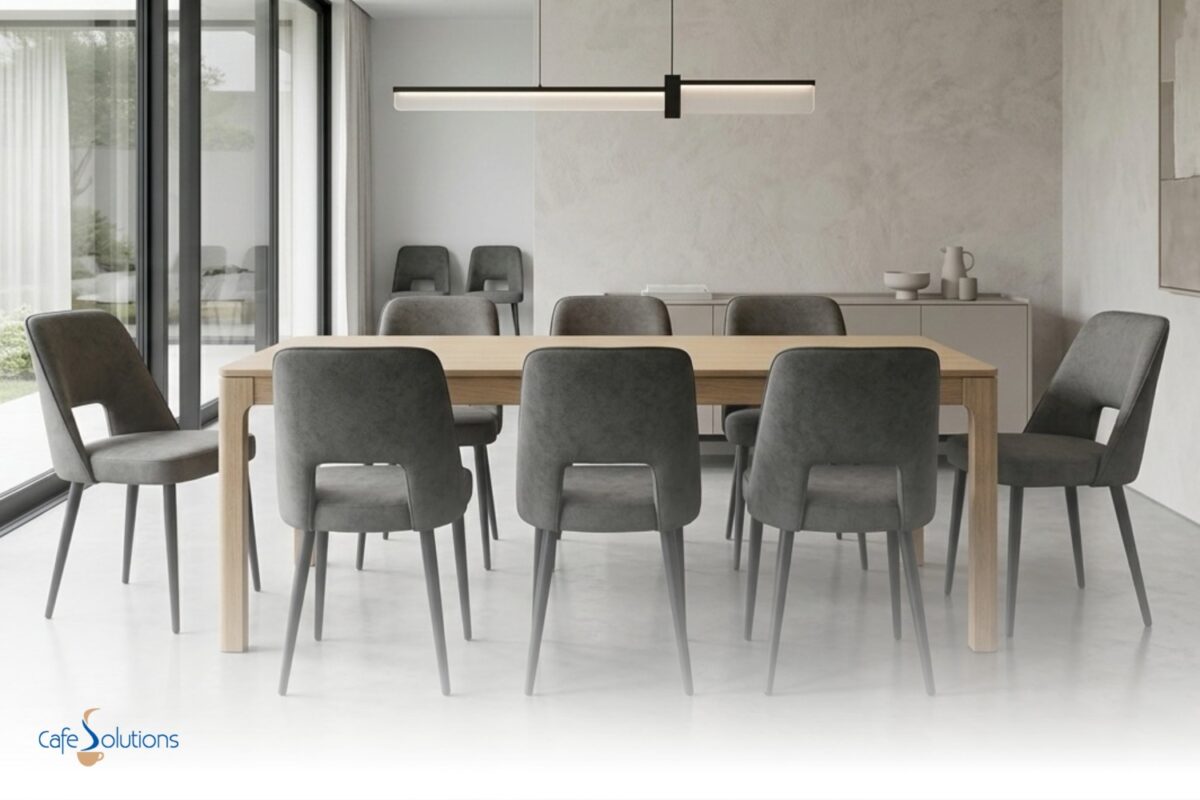
Upholstered chairs place fabric or PU upholstery over a padded seat, and some models also pad the back. They suit fine dining rooms, hotel restaurants, waiting areas and lounge zones where customers are expected to remain seated for longer. Upholstery also softens sound and gives the room a more substantial finish.
The trade-off is more involved cleaning. Operators should check the cover material, seam construction, stain resistance and access around the seat before committing to a large order.
Upholstered chairs generally sit in the mid to premium tier because the padding and finishing add materials and labour. See our range of upholstered commercial chairs.
Arm and tub chairs
Arm chairs support the forearms, while tub chairs use a curved back that often wraps around the sitter. Both can make longer meals more comfortable and help define premium dining, lounge or waiting zones. They also occupy more space than armless chairs and need extra clearance besides tables.
Measure the full width, not only the seat, and confirm that the arms fit beneath or besides the table as intended. These chairs can slow table resets if they are heavy, so placement matters in busy sections.
Prices range from mid-tier moulded arm chairs to premium upholstered tub designs. Compare our commercial arm chairs.
Stackable and event chairs
Stackable chairs are designed around operations rather than one visual category. Metal, resin and moulded chairs can all be stackable if the frame and leg position allow safe nesting. They suit function rooms, training spaces, food courts and venues that regularly change capacity or clear the floor.
Check the stated stack quantity, total stack height and whether a chair trolley is recommended. A chair that stacks securely saves storage space and reduces handling time, but excessive stacking can damage finishes if the model lacks suitable buffers.
Stackable chairs are available from budget to mid-range price tiers. Our stackable cafe chairs include practical options for flexible commercial layouts.
Explore Our Complete Cafe Chair Range
Matching Style to Venue Type
Style should support the kind of service the venue runs. The table below maps common starting points rather than replacing a full seating assessment. Floor plan, table height, outdoor exposure and expected sitting time still need to be checked against the actual product.
| Venue Type | Useful Starting Styles | Why They Suit |
|---|---|---|
| Cafe | Metal, Tolix, Parisian and bentwood | Compact profiles, quick resets and a clear visual identity |
| Bistro | Bentwood, Parisian and cross-back | Distinct shapes suit relaxed table service without taking over the room |
| Casual restaurant | Metal, cross-back and selected upholstered chairs | A practical balance of cleaning, comfort and daily durability |
| Fine dining | Upholstered, arm and tub chairs | More support for longer meals and a more substantial seating experience |
| Function room | Stackable metal, resin or cross-back chairs | Efficient storage and faster changes between room layouts |
For more layout inspiration, review our cafe furniture design ideas. If your floor plan includes shared tables, our article on communal seating in restaurants explains where that format can support capacity and group dining.
Commercial Durability Notes
Look for relevant commercial testing
Commercial chairs face repeated loading, movement and cleaning that home furniture may never experience. Testing gives buyers a clearer basis for comparison.
Furntech-AFRDI testing assesses furniture against specified standards, but certification applies to the tested product, not automatically to every chair in the same style family. Check the product listing or ask our team which models are Furntech-AFRDI tested.
Treat stackability as a specification
A chair is only stackable when the manufacturer describes it that way. Confirm the maximum recommended stack, the space required and how staff will move the stack.
Dragging chairs or building unstable stacks can damage frames, scrape floors and create avoidable handling risks.
Rotate chairs to spread wear
The same tables often fill first, which means their chairs receive more use. Rotate matching chairs between busy and quieter sections so wear, fading and compression develop more evenly.
A simple rotation during cleaning or weekly floor resets can extend the useful appearance of the whole set.
Inspect and maintain the full set
Build chair checks into regular venue maintenance. Tighten fixings as permitted, replace damaged floor glides and remove any chair with movement, a cracked frame or an unstable joint until it has been assessed.
Use cleaning products that suit the frame, seat and upholstery instead of applying one chemical to every material.
Compare Commercial Chair Styles With Cafe Solutions
Once you have narrowed the shortlist to one or two chair styles, compare their dimensions, materials, indoor or outdoor rating, stackability and commercial testing. Our team can help you match those details to your service format and floor plan.
Browse our complete cafe chair collection or contact Cafe Solutions before ordering a full venue quantity.
Types of Dining Room Chairs FAQs
What makes a chair a cafe chair?
A cafe chair is designed or selected for frequent commercial use, quick cleaning and regular movement. Useful features may include a compact footprint, durable frame, replaceable floor glides and stackability.
The exact requirements depend on the venue, so operators should check the product specification rather than relying on the word ‘cafe’ in the name.
Are dining chairs and cafe chairs the same?
The terms overlap, but they do not always mean the same thing. A dining chair describes the seating position and use, while a cafe chair usually implies a commercial setting with higher turnover.
Some dining chairs are suitable for hospitality, but residential products may not be built or tested for the same workload.
What chairs do restaurants use?
Restaurants use metal, bentwood, cross-back, Parisian, upholstered, arm and moulded chairs, depending on the service style and space.
Casual venues often favour easy-clean, compact models. Fine dining and hotel restaurants may use upholstered or arm chairs where longer sitting time justifies the extra space and maintenance.
What is the most durable dining chair material?
There is no single most durable material for every venue. A well-made commercial steel chair can handle high turnover, aluminium can reduce handling weight, and commercial resin performs well in many flexible settings.
Joinery, finish, testing, environment and maintenance all affect how long a chair lasts.
What is a bentwood chair?
A bentwood chair uses timber components shaped into curves, traditionally through steam bending. The technique creates the rounded backs and light frame associated with the style.
Commercial versions are popular in cafes and bistros because they provide a distinctive shape without a bulky footprint.
Back to Top: Types of Dining Room Chairs | A Cafe & Restaurant Operator’s Guide to Every Style