


The best outdoor seating ideas do more than improve the appearance of your venue. They increase usable capacity, support efficient service and give customers a practical reason to choose an outdoor table.
However, a successful outdoor area needs furniture that suits its location, weather exposure and expected turnover. A narrow footpath requires a different approach from a rooftop bar or large beer garden.
At Cafe Solutions, we supply commercial outdoor furniture for Australian cafes, restaurants, pubs and hospitality venues. Explore our range to start planning your outdoor area, or contact our team if you need help selecting furniture for a specific layout.
Key Takeaways
- Match the furniture to the outdoor setup, rather than choosing products based on appearance alone.
- Commercial-grade outdoor furniture should offer UV resistance, corrosion resistance and enough stability for exposed conditions.
- Compact tables and stackable chairs work well for footpath dining and other restricted areas.
- Courtyards and beer gardens can support larger tables, communal seating and more varied furniture arrangements.
- Rooftops and kerbside parklets require careful attention to wind, barriers, access and local approval requirements.
- Council rules vary, so confirm permits, boundaries, accessibility requirements and operating conditions before installation.
- Stackable, lightweight furniture makes daily pack-down and off-season storage easier.
What Makes Outdoor Furniture Commercial-Grade?
Residential furniture is generally designed for occasional use. Commercial outdoor furniture must handle daily movement, regular cleaning, changing weather and a much higher volume of customers.
Three factors are particularly important when comparing furniture for an Australian hospitality venue.
UV resistance
Constant sun exposure can fade colours, weaken some plastics and damage unsuitable surface coatings. Commercial outdoor furniture should use UV-stabilised materials or finishes designed to slow this deterioration.
UV resistance is especially important for venues in uncovered locations. Rooftops, footpaths and open courtyards may receive direct sunlight for most of the day.
Rust and corrosion resistance
Outdoor tables and chairs are frequently exposed to rain, humidity, cleaning chemicals and coastal air. These conditions can cause untreated steel and low-quality hardware to corrode.
Aluminium, appropriately treated steel and outdoor-grade stainless steel components are generally better suited to exposed hospitality areas. Frames should also have finishes that cover joints and other vulnerable sections.
Rust resistance does not mean that furniture requires no maintenance. Regular cleaning, inspections and prompt repairs will help extend its service life.
Stability in windy conditions
Outdoor furniture must be stable enough for the conditions at your venue. This is particularly important on rooftops, exposed footpaths and coastal sites.
There is no single furniture weight or wind rating suitable for every location. Building height, surrounding structures and local weather patterns can all affect wind exposure. Follow the product specifications, site requirements and any professional advice relevant to your property.
Heavier furniture may provide more stability, but it can be harder for staff to move. The goal is to find a workable balance between stability, safe handling and storage.
6 Outdoor Seating Setups That Fill Tables
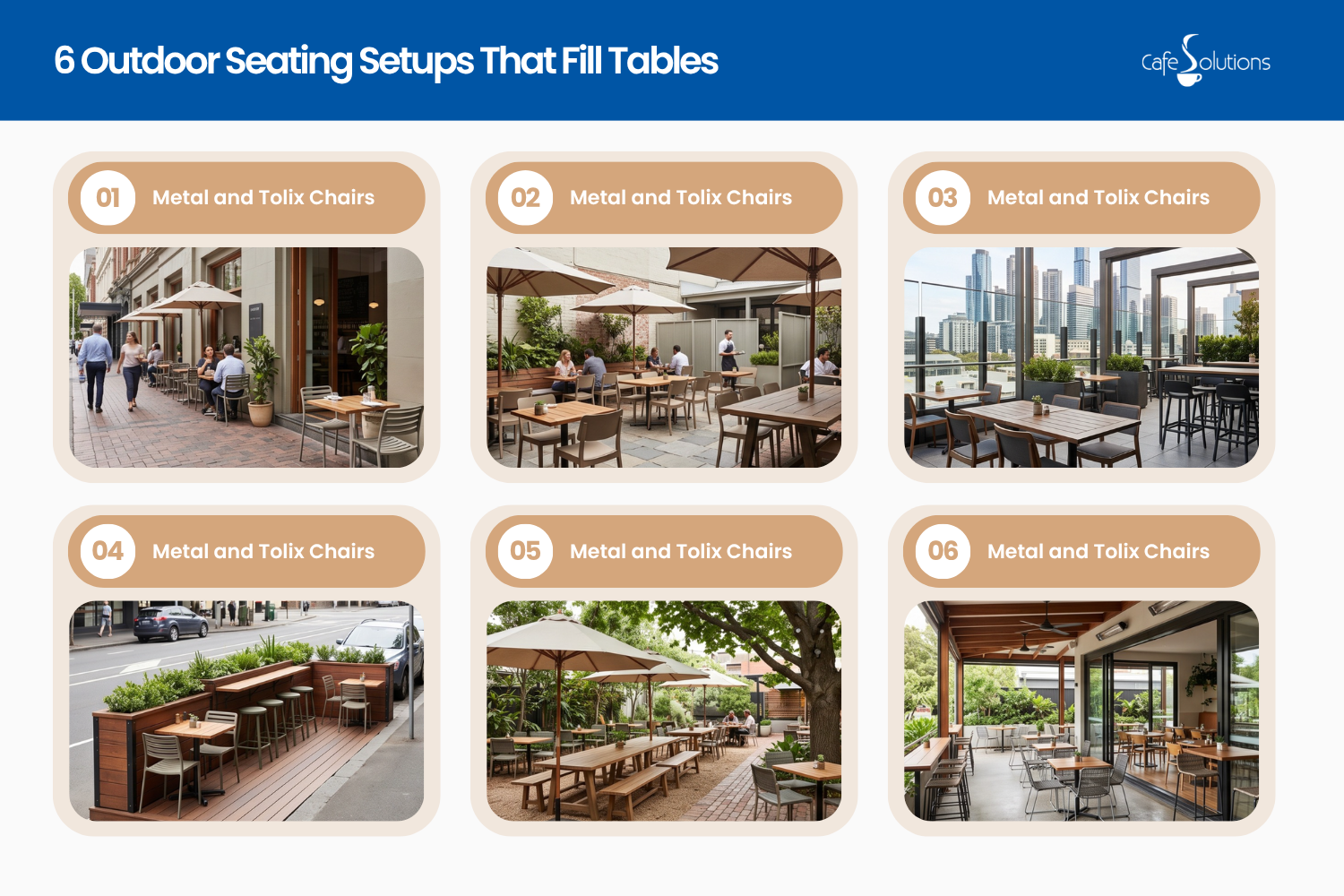
A good alfresco seating setup begins with the way customers and staff will use the space. Consider table turnover, group sizes, service routes, weather exposure and storage before ordering furniture.
For broader planning principles, see our guide to creating a beautiful and functional cafe layout and our practical cafe design resources.
1. Footpath dining
Footpath dining can add valuable seats without requiring a large dedicated outdoor area. It works particularly well for cafes serving takeaway coffee, breakfast and quick lunches.
The main challenge is limited width. Furniture must fit within the approved trading area while leaving enough room for pedestrians, mobility aids, prams and venue access.
Recommended furniture list:
- Compact two-person tables
- Square or round outdoor table tops
- Slim outdoor table bases
- Lightweight, stackable outdoor chairs
- Removable barriers, where approved
- Small umbrellas, where space and permits allow
Two-person tables provide useful flexibility. Staff can keep them separate during quieter periods or combine them for groups when the layout permits.
Choose outdoor chairs with a relatively narrow footprint and easy-clean surfaces. Stackable models are particularly useful if your permit requires furniture to be brought inside after trading.
Weatherproofing note: Prioritise UV-stabilised seats and corrosion-resistant frames. Footpath furniture may receive direct sun, rain and dirt from passing traffic.
Space and council note: Keep all furniture within the approved boundary. Do not allow chairs, signs or table legs to reduce the required pedestrian clearance. Rules differ by council, so confirm local requirements before setting up.
2. Courtyard seating
Courtyards provide more layout freedom than footpaths. They can accommodate a mix of table sizes, planters and seating zones without disrupting the public footpath.
A flexible courtyard layout might use two-person tables around the perimeter and larger tables in the centre. This allows staff to respond to couples, families and groups without dedicating the entire space to one customer type.
Recommended furniture list:
- Two-person and four-person outdoor tables
- Modular square table tops
- Outdoor chairs with supportive backs
- One communal table
- Large umbrellas or an approved shade structure
- Planters or screens for zoning
A communal table can fill space that would otherwise be difficult to use efficiently. It can also support groups and busy service periods. Our guide to communal seating in restaurants explains where this format works best.
Weatherproofing note: Courtyard furniture may receive uneven exposure. One section might remain shaded while another receives strong afternoon sun, so assess each zone separately.
Space and council note: Maintain a clear route between the venue entrance, tables, service areas and emergency exits. Avoid creating narrow gaps that become difficult to navigate when chairs are occupied.
3. Rooftop seating
Rooftop venues can support premium dining, bar service and events, but furniture selection requires extra care. Wind exposure is usually the biggest concern.
Light chairs and loose accessories can become unstable during sudden gusts. Furniture should be selected with the site’s actual conditions in mind, including the building height, screening and rooftop design.
Recommended furniture list:
- Stable outdoor tables with appropriately weighted bases
- Commercial outdoor chairs suited to exposed conditions
- Low lounge seating, if suitable for the service model
- Secured planters or screens
- Outdoor bar tables and stools
- Approved shade structures
A combination of dining-height and bar-height furniture can create distinct zones without constructing permanent divisions. Browse our bar furniture when planning a standing drinks area or casual rooftop section.
Weatherproofing note: Select UV-resistant finishes and materials that tolerate rain and rapid temperature changes. Cushions should be specifically designed for commercial outdoor use and stored when severe weather is expected.
Space and council note: Rooftop layouts may be affected by building approvals, occupancy limits, balustrades, emergency access and wind management requirements. Obtain appropriate professional advice before changing the layout or installing shade structures.
4. Kerbside parklet
A kerbside parklet converts approved roadside space into a compact dining area. It can add visible seating in dense commercial areas where internal floor space is limited.
Because the parklet is close to vehicles, its barriers and access points are just as important as the tables and chairs. Furniture should fit fully inside the protected area.
Recommended furniture list:
- Narrow two-person tables
- Bar-height ledges or counters
- Commercial outdoor stools
- Compact stackable chairs
- Fixed or approved protective barriers
- Planters that do not obstruct visibility
Bar-height seating can make efficient use of a narrow perimeter. Before selecting stools and counters, review our guide to commercial bar table height to create a comfortable combination.
Our outdoor stools can also suit parklets where full dining tables would take up too much space.
Weatherproofing note: Parklet furniture is exposed to road dust, splashes, rain and strong sunlight. Smooth, non-porous surfaces will generally be easier for staff to clean between services.
Space and council note: Parklets normally require specific council or road authority approval. Confirm requirements for barriers, visibility, accessibility, drainage, operating hours and furniture placement.
5. Beer garden seating
Beer gardens need durable furniture that can serve groups without making the layout difficult for staff to manage. Large tables are useful, but an area filled entirely with fixed group seating may be inefficient during quieter periods.
Combine communal tables with smaller dining settings. This gives groups somewhere to sit while retaining options for couples and small parties.
Recommended furniture list:
- Long communal tables
- Benches or durable outdoor chairs
- Four-person outdoor tables
- Outdoor bar tables and stools
- Large commercial umbrellas
- Stackable chairs for overflow seating
Use larger tables in open central areas and smaller settings around the perimeter. If the venue hosts events, keep at least part of the furniture movable so staff can adjust capacity and circulation.
Weatherproofing note: Beer garden furniture must tolerate spills, frequent cleaning and extended sun exposure. Avoid surfaces with deep grooves or complicated joins that collect water and food debris.
Space and council note: Allow wider service routes around high-capacity tables. Consider how staff will carry trays, collect glassware and reach each table when the venue is full.
6. Covered patio or verandah seating
A covered patio or verandah offers some protection from rain and direct sun, making it one of the most versatile outdoor setups. However, furniture near the edges may still receive wind-driven rain and strong morning or afternoon sunlight.
This area can operate as an extension of the main dining room. Using similar table dimensions inside and outside makes it easier to combine settings and maintain a consistent service process.
Recommended furniture list:
- Two-person and four-person tables
- Commercial outdoor chairs
- Lightweight table tops
- Stackable chairs for flexible capacity
- Outdoor bar tables for narrow sections
- Portable screens, where permitted
Consider using the same table base and top dimensions across several settings. Standardisation makes replacement, rearrangement and storage easier.
Browse our outdoor table tops to compare practical surfaces for covered and partially exposed dining areas.
Weatherproofing note: Do not assume a roof makes indoor furniture suitable for outdoor use. Humidity, reflected sunlight and wind-driven rain can still damage materials intended only for indoor environments.
Space and council note: Keep routes between indoor and outdoor tables clear. Pay particular attention to doorways, ramps, steps and areas where staff carrying trays may cross customer traffic.
Weatherproof Materials That Actually Last in Australian Sun
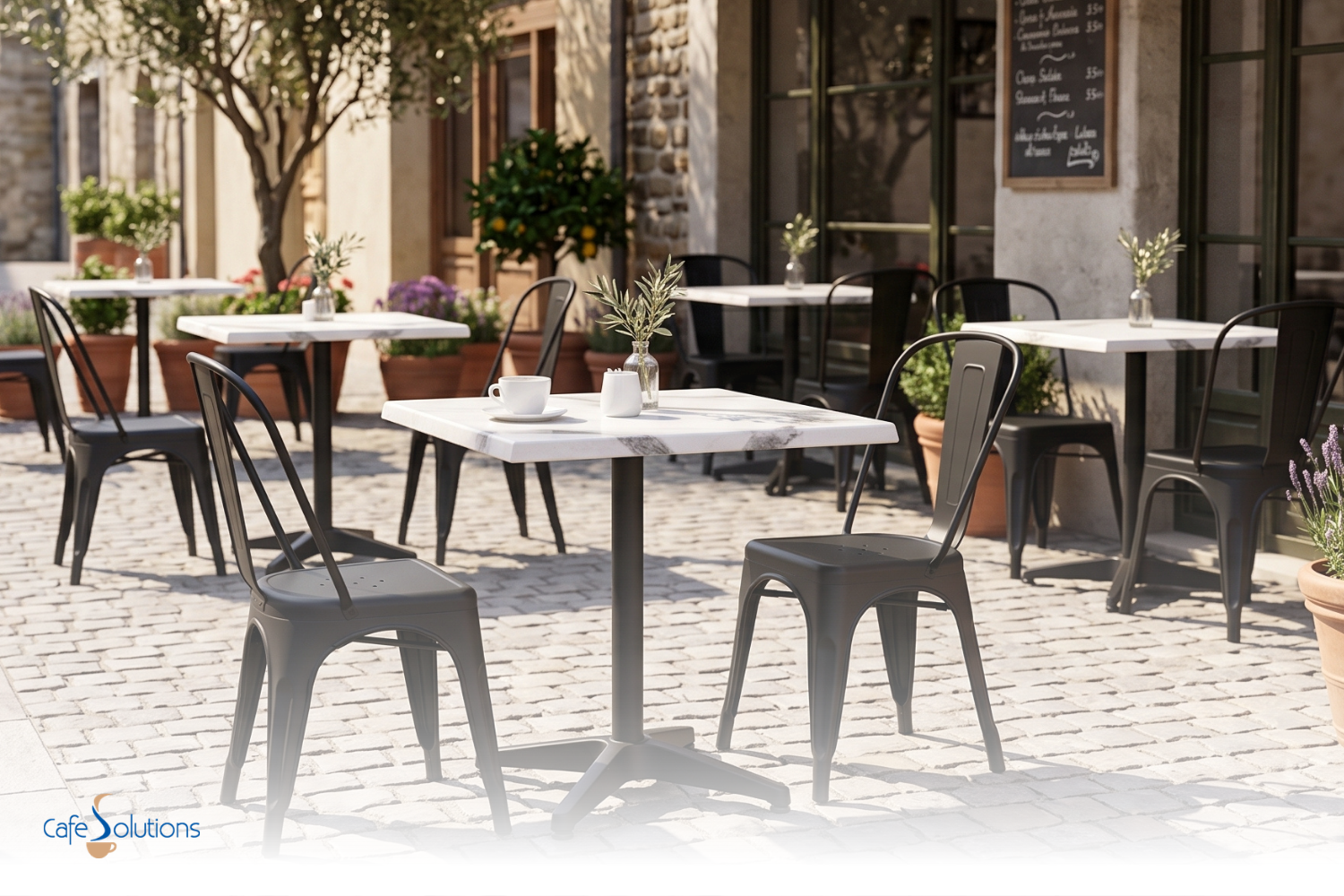
No outdoor material lasts indefinitely without maintenance. However, choosing materials suited to commercial use can reduce fading, corrosion and premature replacement.
Aluminium
Aluminium is lightweight, corrosion resistant and relatively easy for staff to move. Powder-coated aluminium is commonly used for outdoor cafe furniture because the coating adds protection and provides a clean finish.
Inspect the coating regularly. Chips and scratches should be addressed before damage spreads around exposed areas.
Polypropylene and other outdoor-grade plastics
Commercial polypropylene seating can be practical for busy cafes. It is easy to clean, available in many colours and often designed to stack.
Confirm that the material is UV stabilised for outdoor use. Low-quality plastics can fade, become brittle or lose strength after prolonged sun exposure.
Treated steel
Steel provides strength and weight, which may be useful in moderately exposed areas. It must have a suitable protective coating to reduce rust risk.
Pay close attention to welds, feet, fasteners and scratches. Water collecting around unprotected sections can lead to corrosion.
Stainless steel
Stainless steel is often selected for its clean appearance and corrosion resistance. It still requires cleaning, particularly in coastal areas where salt deposits can build up.
The grade and finish matter. Select products intended for the conditions in which they will be used.
Compact laminate and outdoor table tops
Outdoor table tops should resist moisture, heat, spills and frequent cleaning. Compact laminate and other purpose-made exterior surfaces can provide a practical combination of durability and low maintenance.
Check whether the complete table is suitable for outdoor use. A weatherproof top will not compensate for an unsuitable base, fittings or fixing method.
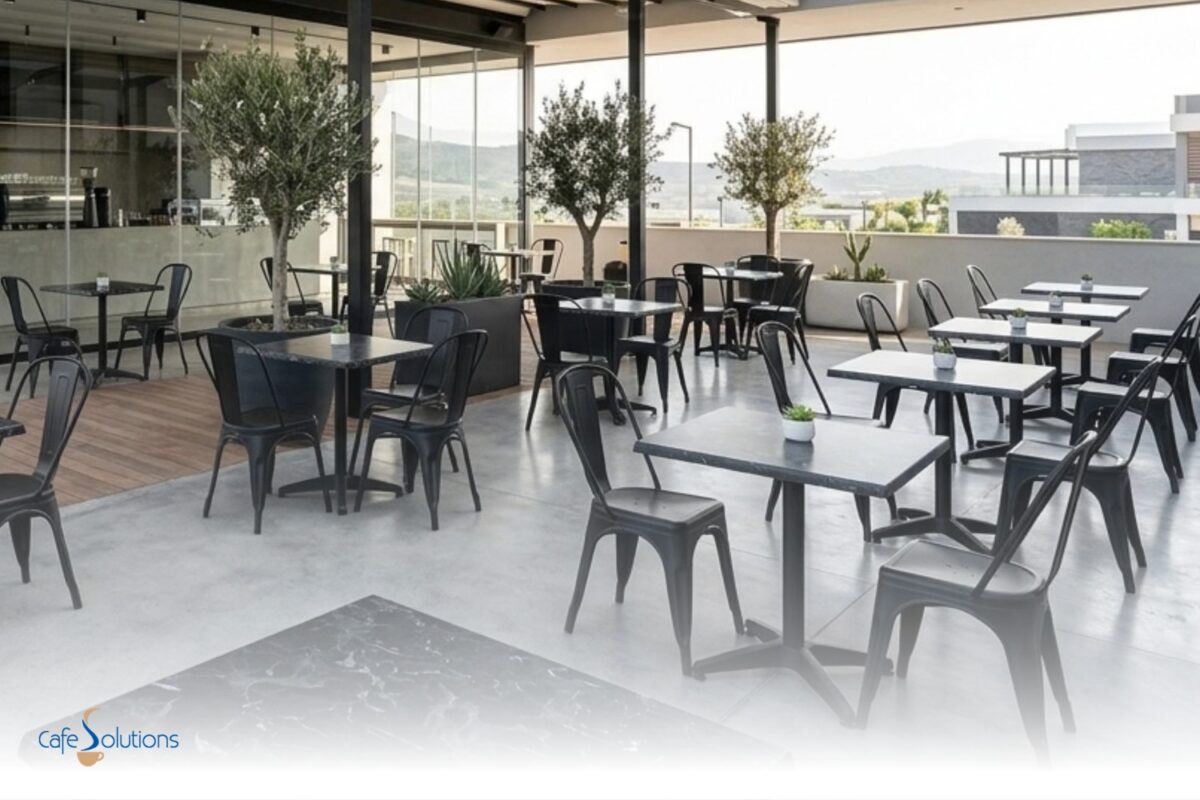
Explore Our Complete Outdoor Chair Range
Footpath Permits And Spacing Basics
Outdoor dining rules differ between Australian councils. Some areas require a footpath dining permit, while others may also require planning, liquor licensing or road authority approval.
Before purchasing furniture, confirm:
- The boundaries of the approved dining area
- Minimum pedestrian clearances
- Accessibility requirements
- Required distance from kerbs, crossings and street furniture
- Rules for barriers, umbrellas, heaters and signage
- Approved operating hours
- Whether furniture must be removed after service
- Insurance and public liability requirements
Your layout must work when customers are seated, not only when chairs are tucked beneath the tables. Measure from the back of an occupied chair and allow room for customers and staff to pass.
Table size also affects capacity. Smaller tables can improve flexibility, but packing too many settings into the area will make service slower and reduce accessibility. Test the layout with physical measurements before placing a full furniture order.
Off-Season Storage And Stackables
Stackable furniture helps operators adjust seating capacity, clear the area for cleaning and store furniture during severe weather or quieter seasons. It is particularly useful for footpath dining, event spaces and venues with permit conditions requiring daily pack-down.
Choose stackable chairs that staff can lift safely. Check how many chairs the manufacturer recommends placing in one stack, as excessively high stacks can become unstable or damage the frames.
Furniture should be cleaned and completely dried before long-term storage. Store it in a dry, ventilated area, and avoid placing heavy items on table tops or chair seats.
Inspect furniture before returning it to service. Look for loose fixings, worn feet, damaged coatings and early signs of corrosion. Our cafe maintenance guide covers additional steps for keeping hospitality furniture and equipment in working condition.
Plan Your Outdoor Seating With Cafe Solutions
The right outdoor furniture mix depends on your available space, service model and exposure to Australian weather. A compact footpath may need stackable chairs and small tables, while a beer garden may benefit from communal settings, bar-height zones and flexible overflow seating.
Cafe Solutions supplies commercial outdoor chairs, stools, table tops and other furniture for hospitality venues across Australia. Browse our outdoor furniture range or speak with our team about building a practical setup for your cafe, restaurant or pub.
Outdoor Cafe Seating Ideas FAQs
What is the best material for outdoor cafe furniture?
The best material depends on the site and how staff will use the furniture. Powder-coated aluminium is lightweight and corrosion resistant, while UV-stabilised polypropylene is easy to clean and often stackable.
Treated steel may suit venues that need additional weight and stability. Outdoor table tops should also resist moisture, sunlight, heat and frequent commercial cleaning.
How do you stop outdoor furniture from rusting?
Choose corrosion-resistant materials and products with outdoor-grade protective coatings. Clean frames regularly, remove salt and dirt deposits, and inspect welds, feet and fasteners for damage.
Repair chipped coatings promptly and allow furniture to dry before storage. Do not leave untreated steel or unsuitable hardware exposed to rain.
What are the footpath dining rules in Australia?
Footpath dining rules are set by individual councils and can vary significantly. Requirements may cover permits, pedestrian clearance, accessibility, barriers, operating hours, insurance and daily furniture removal.
Contact the relevant council before installing a footpath setup. This article provides general planning information and should not be treated as jurisdiction-specific legal advice.
How much space do you need per outdoor table?
The required space depends on the table size, chair dimensions, service style and local accessibility rules. Measure the table with customers seated and chairs pulled out, then add enough circulation space for staff and other customers.
Avoid calculating capacity from the table dimensions alone. A layout that fits on paper may not function safely during a busy service.
Can you leave outdoor furniture outside in winter?
Commercial outdoor furniture can often remain outside during normal winter conditions if the manufacturer confirms it is suitable. However, bringing furniture under cover or placing it in storage can extend its service life.
Store cushions and other absorbent items in a dry location. Secure or relocate furniture before severe weather, and check local wind conditions and product guidance rather than assuming every outdoor item can remain exposed year-round.
Back to Top: Outdoor Cafe Seating Ideas: Furniture and Setups That Fill Tables